
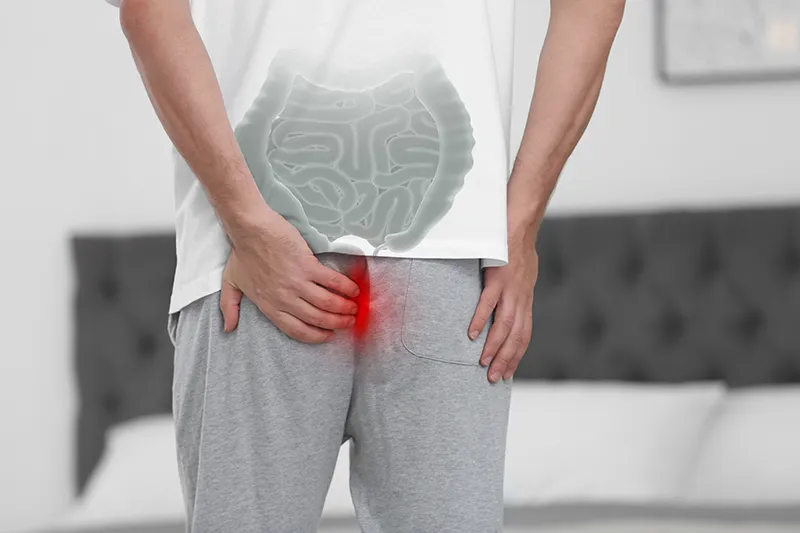
If you have noticed itching, bleeding or discomfort during bowel movements, you may be wondering whether the symptoms will settle on their own or if treatment is needed. Piles are a common condition, and although some improve with simple lifestyle changes, others can become more persistent and begin affecting your comfort and daily routine.
Fortunately, there is a range of treatment options available. From dietary changes and medications to minimally invasive procedures and surgery, the most appropriate approach depends on the type of piles you have and how severe your symptoms are. Understanding these options can help you know what to expect and when it may be time to seek medical advice.
How Are Piles Assessed Before Treatment?
Choosing the right treatment begins with confirming the diagnosis and determining the severity of the piles.
External piles can usually be identified during a physical examination of the anal area. Internal piles, however, often require a digital rectal examination, during which your colorectal surgeon gently examines the rectum using a gloved, lubricated finger.
If further evaluation is needed, additional investigations may include:
- Anoscopy, which uses a short, lighted instrument to examine the anal canal
- Sigmoidoscopy, which allows deeper examination of the lower rectum and bowel
- Additional imaging or investigations if another condition needs to be excluded
A thorough assessment helps determine the grade of the piles and whether conservative treatment, an office procedure or surgery is likely to provide the best outcome.
Conservative Treatment for Early-Stage Piles
First- and second-degree piles can often be managed without surgery, particularly if symptoms are mild. Treatment aims to reduce pressure on the haemorrhoids, relieve symptoms and prevent further progression.
Improving Bowel Habits
Reducing straining during bowel movements is one of the most important parts of treatment.
Your doctor may recommend:
- Drinking more water throughout the day
- Increasing dietary fibre
- Using stool softeners or laxatives when appropriate
- Avoiding prolonged sitting on the toilet
These measures help stools pass more easily, reducing irritation to the affected blood vessels.
Medication
Medication may also be recommended to control symptoms.
Depending on your condition, this may include:
- Oral medications
- Medicated suppositories
- Topical treatments to relieve discomfort or irritation
Although these treatments do not remove piles, they can improve symptoms and may be sufficient for milder cases.
Procedures for Persistent Internal Piles
If symptoms continue despite conservative treatment, minimally invasive procedures performed in the clinic may be recommended. These procedures are most suitable for selected internal haemorrhoids because they are performed above the dentate line, an area of the anal canal with relatively few pain-sensitive nerves. As a result, most patients experience little discomfort during treatment.
Rubber Band Ligation
Rubber band ligation involves placing a small elastic band around the base of the haemorrhoid to stop its blood supply. Over the following days, the treated tissue shrinks and separates naturally. Most patients experience only a temporary feeling of pressure or fullness before returning to normal activities.
Sclerotherapy
Sclerotherapy involves injecting a specialised solution beside the haemorrhoid, causing the supplying blood vessels to shrink and reducing bleeding.
This treatment is commonly used for smaller internal piles and may be particularly suitable for patients taking blood-thinning medication because no incision is required.
Ultrasound-Guided Haemorrhoidal Artery Ligation
This technique uses an ultrasound probe to identify the arteries supplying the haemorrhoids. These arteries are then tied off, reducing blood flow and allowing the haemorrhoids to shrink over time.
Haemorrhoid Energy Transfer (HET)
Haemorrhoid Energy Transfer is a newer treatment that uses controlled thermal energy to treat selected internal haemorrhoids. Your colorectal surgeon will advise whether this technique is appropriate based on your individual condition.
Surgical Treatment for Advanced Piles
Patients with third- or fourth-degree piles, or those whose symptoms continue despite other treatments, may require piles surgery.
The most appropriate procedure depends on the severity and characteristics of the haemorrhoids.
Conventional Haemorrhoidectomy
Conventional haemorrhoidectomy is considered the most definitive method of piles removal. It involves surgically removing the enlarged haemorrhoids through small incisions around the anus.
This procedure is typically recommended for large third- or fourth-degree piles, or second-degree piles that have not responded to other treatments. Although recovery is generally longer than with minimally invasive procedures, it offers the lowest risk of recurrence.
Stapled Haemorrhoidectomy
Stapled haemorrhoidectomy is commonly performed for prolapsing internal piles. The procedure repositions the prolapsed tissue and reduces its blood supply, allowing the haemorrhoids to shrink.
Compared with conventional haemorrhoidectomy, it is generally associated with less postoperative discomfort and a quicker recovery. However, it may not be suitable for every patient and can carry a higher risk of recurrence.
Laser Haemorrhoidectomy
Laser haemorrhoidectomy uses laser energy to remove the haemorrhoids in a similar way to conventional surgery.
Despite common misconceptions, laser treatment has not been shown to provide clear advantages over standard haemorrhoidectomy. Your colorectal surgeon will recommend the most appropriate surgical approach based on your individual condition.
Finding the Most Appropriate Treatment for Piles
The best treatment for piles depends on more than the severity of the symptoms alone. A careful assessment helps determine whether conservative management, a minimally invasive procedure or surgery is likely to provide the most effective and lasting relief.
At our piles clinic in Singapore, Dr Ho Kok Sun provides evaluation and treatment for piles using an individualised approach based on the severity of your condition and symptoms. If you are experiencing ongoing discomfort or rectal bleeding, contact the clinic to schedule a consultation and explore the treatment options available to you.
Frequently Asked Questions (FAQs) About Piles Treatment
Is it possible to have more than one type of piles treatment?
Yes. Some patients may begin with conservative treatment before progressing to a minimally invasive procedure if symptoms persist. Others may require surgery if previous treatments have not been effective or if the piles become more advanced.
Does every prolapsing pile require surgery?
Not always. Some prolapsing internal piles can still be treated using minimally invasive procedures, depending on their size and severity. A clinical assessment is needed to determine the most suitable option.
Can pregnancy-related piles be treated?
Yes. Many piles that develop during pregnancy improve after childbirth and can often be managed conservatively. If symptoms persist after delivery or become severe, your doctor can advise whether further treatment is appropriate.